Early cancer screening
Breast examination and cervical screening following WHO guidance, with screen-and-treat for precancerous lesions where protocols allow.
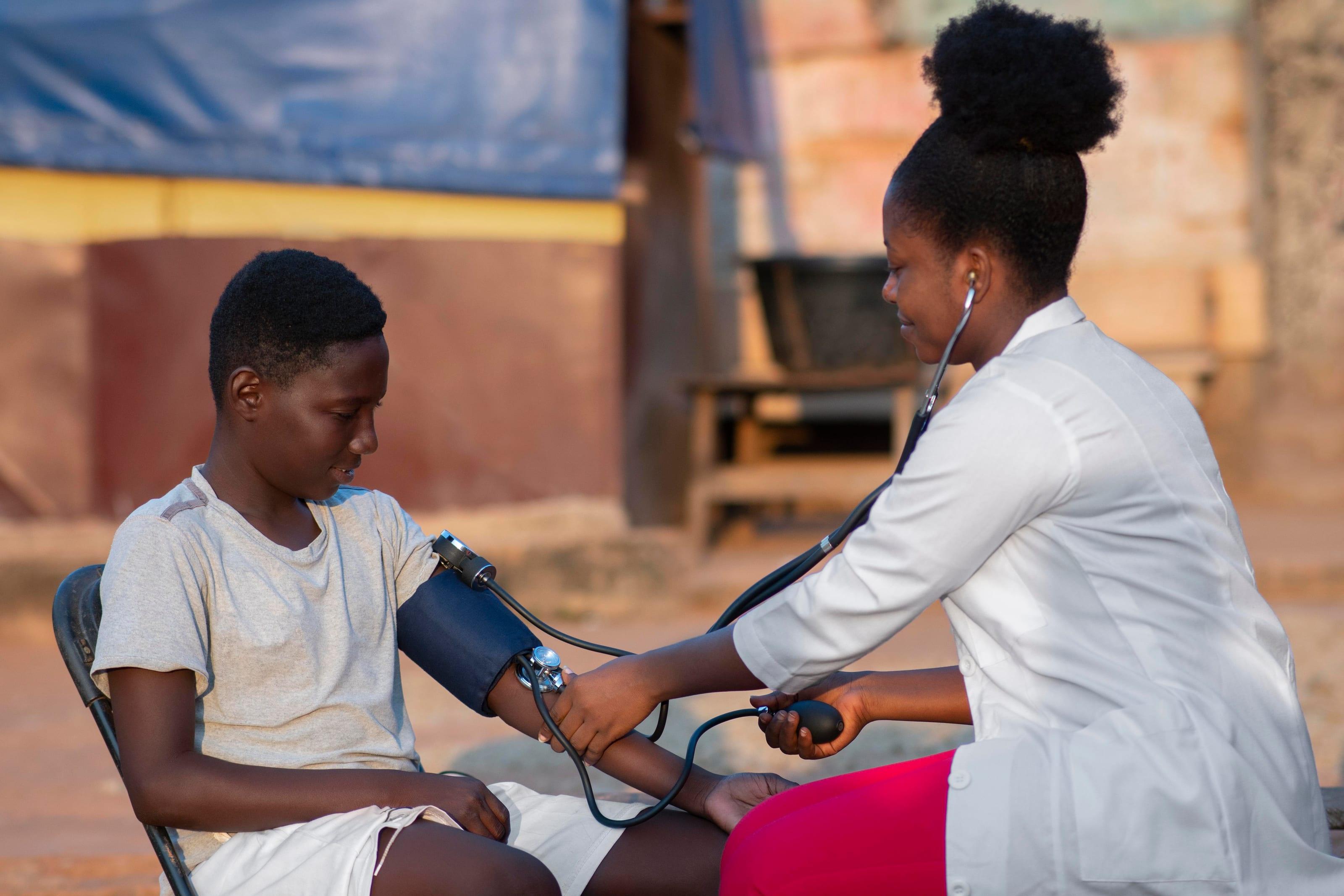
Initiative 01 · Mobile hospitals
A programme model for fleets of mobile hospitals that take early screening, maternal and child health, telemedicine and chronic disease care to the communities farthest from a hospital.
The challenge
Cervical cancer can be prevented. Breast cancer found early is usually survivable. Most maternal deaths can be avoided with timely care. Yet across sub-Saharan Africa, women are too often diagnosed late, or not at all, because the nearest hospital is a day’s travel and a day’s wages away.
Building a hospital in every community is not possible. Bringing the hospital’s most important services to every community is.
18 of 20
70%
1.55
The model
Each mobile unit is a fully equipped clinic, staffed by trained clinicians, scheduled on predictable routes and linked to referral hospitals for anything it cannot treat on the spot.
Breast examination and cervical screening following WHO guidance, with screen-and-treat for precancerous lesions where protocols allow.
Antenatal visits, risk screening, postnatal and newborn checks, immunization support and nutrition counselling.
Live links to specialists, so a woman in a rural district can be seen by a gynaecologist or oncologist without travelling.
Detection and follow-up of hypertension, diabetes and other long-term conditions, with medicines and monitoring.

The patient journey
Community health workers and local leaders announce visits and invite those most at risk.
Registration, consent and screening on board, recorded in an electronic record.
Treatment on the spot where possible; a booked referral with transport support where not.
Results returned, follow-up visits scheduled on the next route, and no one forgotten.
Deployment
Population, disease burden, roads and referral facilities mapped to plan routes and fleet size.
Vehicle and clinical specifications, procurement, maintenance contracts and the patient record system.
Recruitment and training of nurses, midwives, clinicians, drivers and community health workers.
A first region served, measured against agreed indicators and improved.
More units and regions, then a full handover to national teams, with our support as needed.
Planning tool
Move the sliders to see how fleet size, operating days and daily capacity translate into screening coverage, measured against WHO’s target of 70% of women screened.
Illustrative planning figures. Real capacity depends on routes, staffing, consumables, follow-up and national protocols; we establish them in a needs assessment.
Plan it with us
Safeguards
Partnership
Treat on the Street is delivered in partnership. National authorities set priorities and own the programme; we design, deploy and manage it with them.
Treat on the Street is a complete programme model that we design and adapt with each government and its partners. Deployment begins once a country partnership, financing and national approvals are in place.
Every route is linked to referral hospitals. The patient leaves with a booked appointment, her record travels with her, and the programme follows up to make sure she arrives.
That is agreed with each government. Our default is national ownership of the programme’s assets and data, with Chia Dex responsible for design, deployment and, if desired, management.
We present the full programme model, costs and deployment plan in a confidential briefing, in English or in French.

Chia Dex Ventures
Ask our guide
Hello. I’m the Chia Dex Ventures guide, an AI assistant. I can explain our capabilities and programmes, where we work and how to request a briefing, in English or in French. What would you like to know?
AI guide · General information, not advice. Please don’t share personal details. Privacy policy
Talk to our team directly. We reply within two business days, in English or in French.
Request a briefingOur guide