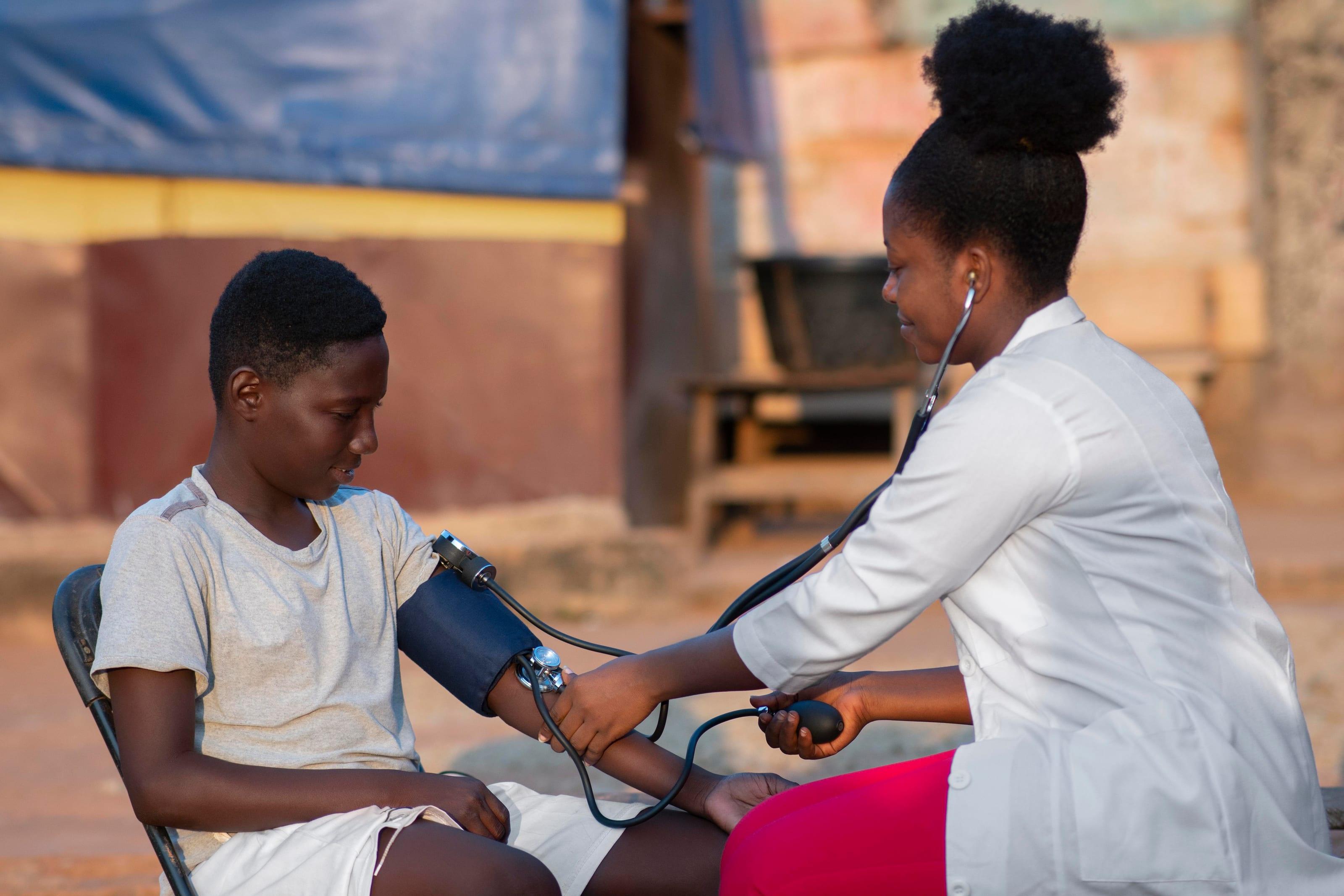
Safe pregnancy
Early and regular antenatal care, risk screening, birth planning and referral for high-risk pregnancies.

Initiative 02 · Women’s health
A programme model that follows women through the moments that matter most: pregnancy and birth, and the screenings that turn deadly cancers into treatable ones.
The challenge
The tools to prevent most maternal deaths and most deaths from cervical cancer already exist: skilled care in pregnancy and childbirth, vaccination, screening and simple treatment of precancerous lesions. What is missing is a system that delivers them reliably to every woman.
Our programme brings those tools together around the woman rather than the facility, and measures progress against the targets the World Health Organization has set.
1 in 55
70%
60%
The model
Services delivered in fixed facilities and on Treat on the Street routes, joined by one record and one team responsible for following her through.
Early and regular antenatal care, risk screening, birth planning and referral for high-risk pregnancies.
Checks for mother and baby in the critical first weeks, breastfeeding support and immunization.
Support for HPV vaccination, screening with high-performance tests and treatment of precancerous lesions.
Awareness, clinical breast examination and fast referral for imaging and diagnosis.
A named navigator who books, reminds and follows up until treatment is complete.
Campaigns with women’s groups, faith leaders and local media that make screening normal.

Her journey
Invitations through community health workers, clinics and campaigns.
Antenatal and cancer screening in facilities or on mobile units.
Same-visit treatment where protocols allow, or a booked referral.
Navigation, results, follow-up and data that shows who still needs care.
Deployment
Current coverage, facilities, workforce and data assessed against WHO targets.
Protocols, staffing, supply chain, referral network and budget agreed with national authorities.
Midwives, nurses, clinicians and navigators trained and supervised.
Pilot districts first, then expansion as indicators improve.
Planning tool
Move the sliders to see how fleet size, operating days and daily capacity translate into screening coverage, measured against WHO’s target of 70% of women screened.
Illustrative planning figures. Real capacity depends on routes, staffing, consumables, follow-up and national protocols; we establish them in a needs assessment.
Plan it with us
Safeguards
Partnership
Women’s health programmes succeed when leaders champion them and systems sustain them. We work alongside both.
Yes. Protocols are aligned with national guidelines and World Health Organization recommendations, including the targets of the Cervical Cancer Elimination Initiative and the Global Breast Cancer Initiative.
Treat on the Street is one delivery channel for this programme, reaching communities far from facilities. The programme also strengthens fixed clinics and hospitals.
Yes. We recommend starting in pilot districts, measuring results and expanding as the indicators improve.
We present the programme model, its costs and its indicators in a confidential briefing for ministries, foundations and partners.
Chia Dex Ventures
Ask our guide
Hello. I’m the Chia Dex Ventures guide, an AI assistant. I can explain our capabilities and programmes, where we work and how to request a briefing, in English or in French. What would you like to know?
AI guide · General information, not advice. Please don’t share personal details. Privacy policy
Talk to our team directly. We reply within two business days, in English or in French.
Request a briefingOur guide