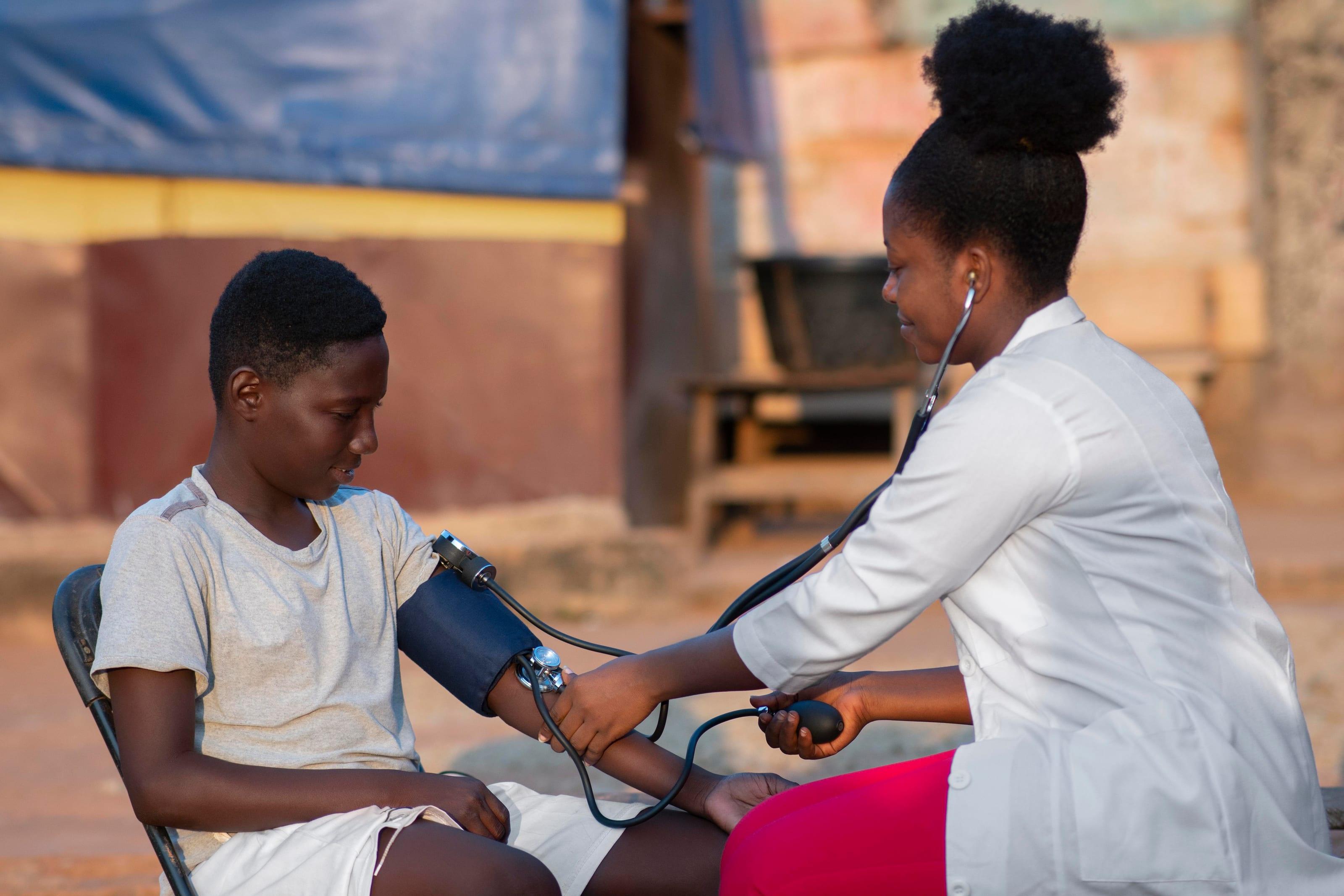
Patient identification
A unique health identifier that links each person’s records across facilities, protected against misuse.

Initiative 03 · Digital health
A programme model for a national electronic medical record system linked to a central, in-country data centre, so a patient’s history follows them to any facility in any province.
The challenge
When records are kept on paper or in disconnected systems, every referral starts from scratch: tests are repeated, allergies are missed and ministries plan without reliable data.
A national record changes that, but only if it is designed for real conditions (intermittent power and connectivity, many languages, limited IT staff) and governed so that citizens can trust it.
1.55
The model
Built on open international standards, so the country is never locked in to a single vendor.
A unique health identifier that links each person’s records across facilities, protected against misuse.
A shared record used in hospitals, clinics and mobile units, designed to work offline.
Secure, in-country hosting with backup and disaster recovery, operated with national partners.
Laboratories, pharmacies, insurers and registries exchanging data through standards such as HL7 FHIR.
Anonymized dashboards for disease surveillance, planning and resource allocation, owned by the ministry.
Users trained, champions in every facility and a national support desk.

Continuity of care
A patient is identified once and recognized at any facility.
A clinician in another province sees the history, allergies and results.
Referrals and results travel electronically, not in an envelope.
Anonymized data helps the ministry see where care is needed next.
Deployment
Facilities, connectivity, power, existing systems, skills and law reviewed.
Standards, hosting, security and the legal framework for data agreed nationally.
Vendor-neutral requirements and transparent selection of software and infrastructure.
A pilot province first, then phased national rollout with training and support.

Data sovereignty
Partnership
A national health record is infrastructure, like roads or power. We design and deliver it with the institutions that will own and run it.
In a data centre in the country, operated with national partners, with encrypted backups under the same national control.
Yes. Facility applications work offline and synchronize when a connection is available, and the design accounts for power interruptions.
Open standards and contractual data portability mean the nation can migrate its data and change vendors without starting over.
We present the architecture, the governance model and a phased budget in a confidential briefing for ministries and partners.

Chia Dex Ventures
Ask our guide
Hello. I’m the Chia Dex Ventures guide, an AI assistant. I can explain our capabilities and programmes, where we work and how to request a briefing, in English or in French. What would you like to know?
AI guide · General information, not advice. Please don’t share personal details. Privacy policy
Talk to our team directly. We reply within two business days, in English or in French.
Request a briefingOur guide